Chicken Karaage: Crispy Japanese Fried Chicken in 45 Min
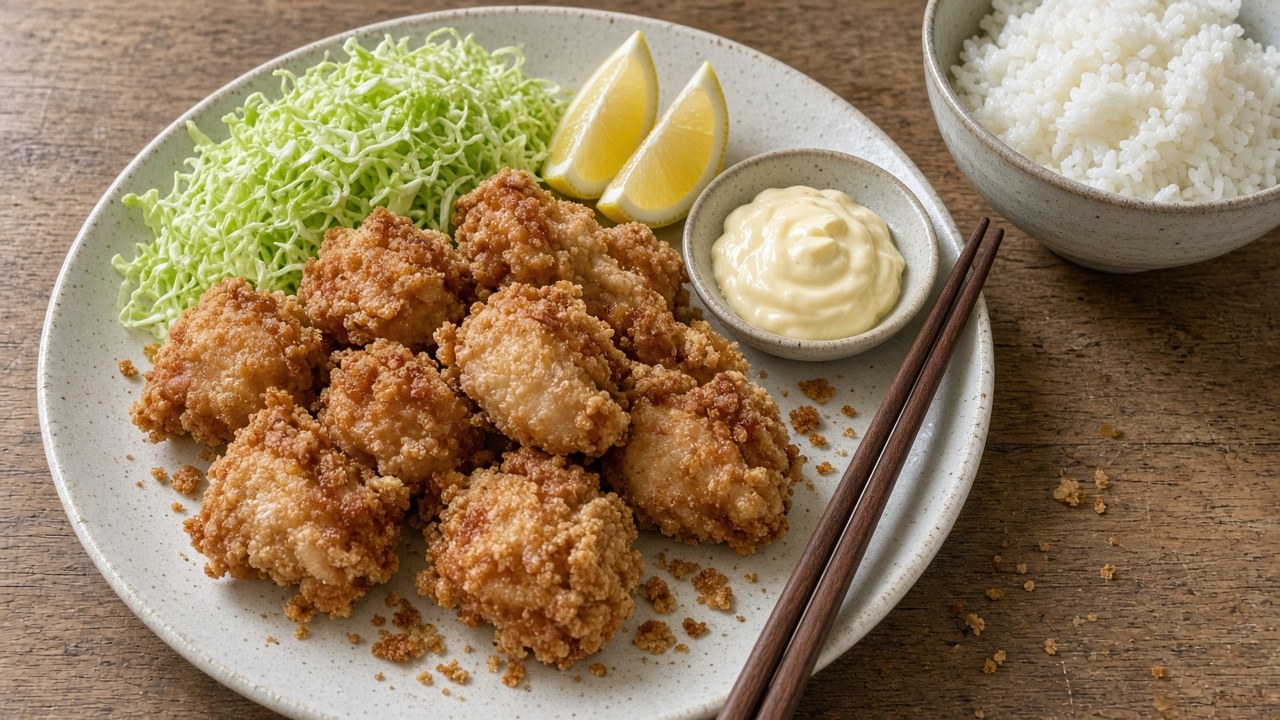
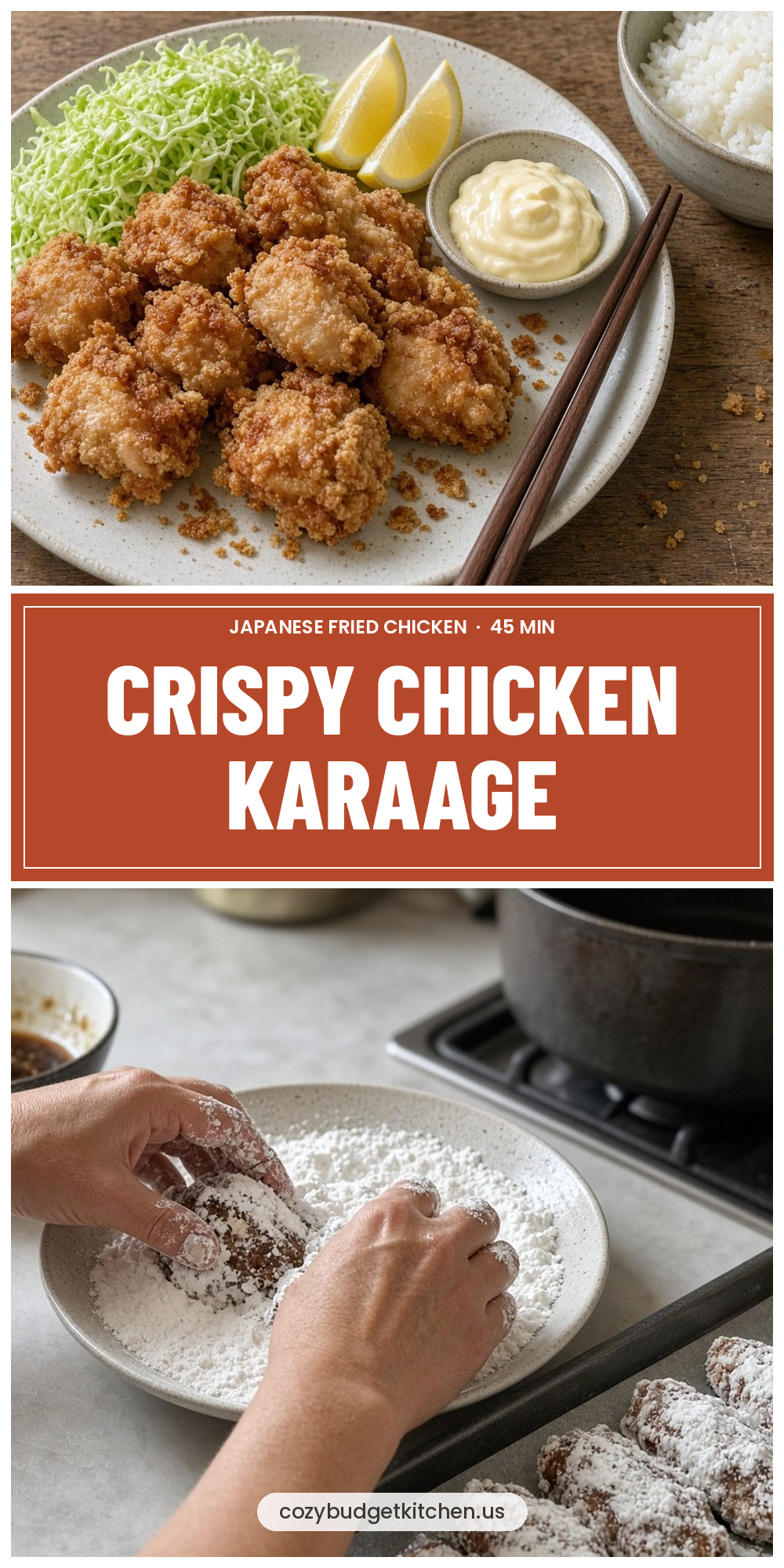
Chicken karaage is Japanese fried chicken, and once you make it at home, it’s hard to go back to anything else. Bite-size pieces of chicken thigh sit in a quick marinade of soy sauce, ginger and garlic, then get a light coat of potato starch and fry until the outside crackles. The inside stays so juicy that you’ll want to keep a napkin handy.
In Japan, you’ll find karaage at izakayas, train station stalls and in bento boxes. My version keeps it simple and uses one foolproof trick for the crunchiest crust: fry it twice. Four servings cost me about $8, which is far less than a takeout order.
Prep: 30 minutes (includes marinating) | Cook: 15 minutes | Total: 45 minutes | Serves: 4 | Diet: dairy-free
What Is Chicken Karaage?
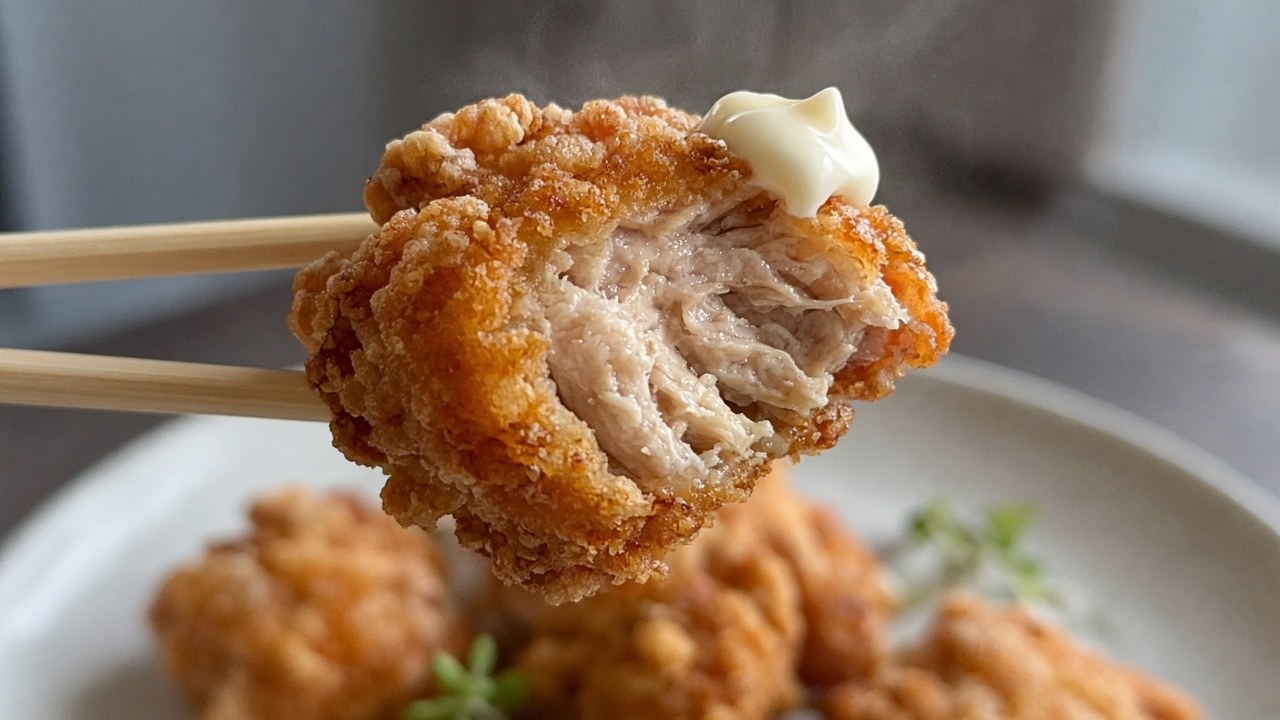
Karaage, pronounced kah-rah-ah-geh, is a Japanese cooking method where food is marinated, coated in starch and deep fried. Chicken is by far the most popular version. Unlike American fried chicken, there’s no buttermilk soak and no thick flour breading. The flavor comes from the marinade, which seasons every bite all the way through, and the coating is thin, light and almost glassy. It’s usually served with a lemon wedge and a little Japanese mayo, and it works as a snack, an appetizer or the main part of a rice bowl dinner.
Why You’ll Love This Chicken Karaage
- Extra crispy. Potato starch and a second fry give you a crust that stays crunchy.
- Juicy every time. Thighs are forgiving and don’t dry out like breast meat.
- Big flavor, short list. Soy, ginger and garlic do most of the work.
- Cheaper than takeout. Chicken thighs are one of the best deals at the meat counter.
- Kid friendly. Think of it as the grown-up version of chicken nuggets.
Ingredients for Chicken Karaage
You can find everything at a regular grocery store. Potato starch is usually in the baking aisle or with the Asian ingredients.
For the Marinade
- 1 1/2 pounds boneless, skinless chicken thighs, cut into 1 1/2-inch pieces (680g)
- 2 tablespoons soy sauce (30ml)
- 1 tablespoon sake or dry sherry (15ml)
- 2 teaspoons finely grated fresh ginger (4g)
- 2 cloves garlic, finely grated (6g)
- 1 teaspoon sugar (4g)
- 1 teaspoon toasted sesame oil (5ml)
For Coating and Frying
- 2/3 cup potato starch or cornstarch (85g)
- 2 tablespoons all-purpose flour (16g)
- About 4 cups neutral oil for frying, such as canola (950ml)
For Serving
- Lemon wedges
- Japanese mayonnaise, such as Kewpie
- Shredded cabbage and steamed rice
Ingredient Notes
Chicken thighs: Boneless, skinless thighs are the classic choice. They have more fat than breasts, so they stay tender in hot oil. You can leave the skin on for an even richer bite.
Sake: It softens the meat and adds a subtle sweetness. Dry sherry or even a splash of white wine works. For no alcohol, use water with a pinch of extra sugar.
Potato starch: This is what Japanese home cooks reach for. It fries into a light, crackly shell. A small amount of flour helps it cling and brown evenly.
Oil: Use any neutral oil with a high smoke point, like canola, vegetable or peanut oil.
How to Make Chicken Karaage
- Cut the Chicken. Pat the thighs dry and cut them into even 1 1/2-inch pieces. Leave a little of the fat on, since it keeps the chicken juicy.
- Marinate. Mix the soy sauce, sake, ginger, garlic, sugar and sesame oil in a bowl. Add the chicken, toss to coat and marinate for 20 to 30 minutes at room temperature, or up to 8 hours in the fridge.
- Heat the Oil. Pour 2 inches of oil into a heavy pot and heat to 325F (165C). Set a wire rack over a sheet pan nearby.
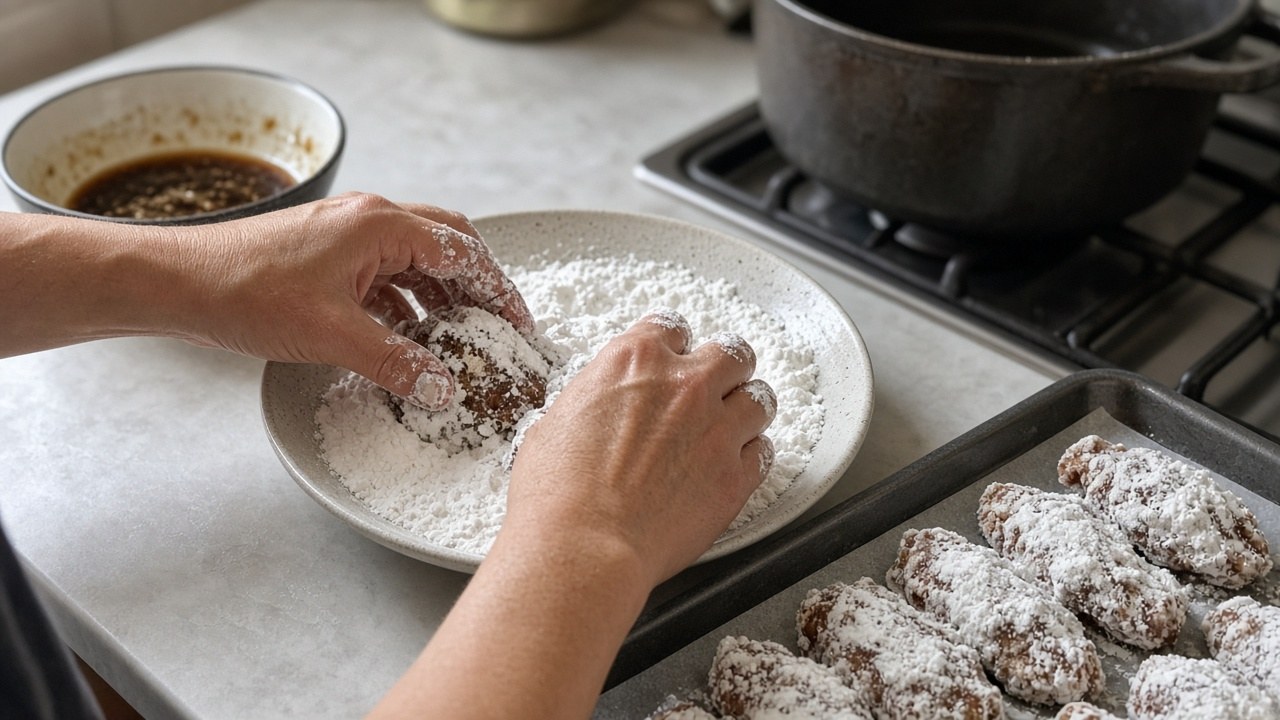
- Coat. Stir the potato starch and flour together on a plate. Lift the chicken from the marinade, letting extra drip off, and press each piece into the starch until fully covered.
- First Fry. Fry the chicken in batches of 6 to 8 pieces for 3 minutes, until pale golden. Move to the rack and rest for 4 minutes. The heat inside keeps cooking the chicken.
- Second Fry. Raise the oil to 350F (175C). Fry the pieces again for 1 to 2 minutes until deep golden and crackly. The thickest piece should read 165F (74C) inside.
- Serve. Drain on the rack for a minute, then serve hot with lemon wedges, Japanese mayo, shredded cabbage and rice.
The Secret to Crispy Karaage: Fry It Twice
The first fry at 325F cooks the chicken gently and sets the coating. Then the pieces rest on a rack, where steam escapes and leftover heat finishes cooking the center. The second fry at 350F is short and hot. It drives off the last bit of moisture in the crust and turns it deep golden and crunchy. Skip it, and the coating softens within minutes. Do it, and your chicken karaage stays crisp even after it sits on the table for a while. Use a thermometer for the oil if you have one. It’s the easiest way to get consistent results.
Tips for the Best Results
Cut even pieces. Similar sizes cook at the same speed, so nothing ends up raw or overdone.
Don’t over-marinate at room temperature. Thirty minutes on the counter is plenty. For longer, keep it in the fridge.
Coat right before frying. If coated chicken sits too long, the starch gets gummy.
Fry in small batches. Too many pieces drop the oil temperature, and the chicken turns greasy instead of crisp.
Drain on a rack, not paper towels. Paper traps steam under the chicken and softens the bottom.
For food safety, chicken should reach an internal temperature of 165F. You can check the full list of safe temperatures on FoodSafety.gov.
Air Fryer and Oven Options
Not up for a pot of oil? Coat the chicken as directed, spray it generously with oil on all sides and air fry at 400F for 12 to 14 minutes, flipping halfway. For the oven, bake on a rack set over a sheet pan at 425F for 20 to 25 minutes, spraying once more at the halfway point. Neither method is quite as crackly as deep frying, but both make a very good chicken karaage on a weeknight.
Choosing Chicken for Karaage
Thighs are the best cut for chicken karaage because they stay moist through two rounds of frying. Look for packs with pieces that are about the same thickness. If some thighs are much thicker, butterfly them open before cutting so every piece cooks evenly. Skin-on thighs make an extra rich chicken karaage, though you’ll need to remove the bones yourself. Family packs are often the cheapest per pound, so I buy one, marinate half for karaage and freeze the rest raw for another night. Avoid pre-cut stir fry strips, which are too thin and turn dry.
What This Recipe Costs
Here’s what I paid this fall: chicken thighs $5.20, potato starch $0.60, soy sauce and sake $0.60, ginger and garlic $0.45, oil about $1.20 (I strain and reuse it once). That’s roughly $8.05 for the batch, or about $2 a plate before rice and cabbage.
What to Serve with Chicken Karaage
The classic plate is rice, finely shredded cabbage with a splash of rice vinegar, lemon wedges and Kewpie mayo. For a bigger meal, serve it with my Asian sesame noodle salad, which balances the crunch with something cool and tangy. It’s also great with a side of my charred corn and avocado salsa for a fun mash-up taco night in tortillas.
Storage and Reheating
Fridge: Store leftovers in an airtight container for up to 3 days.
Reheat: Air fry at 375F for 4 to 5 minutes, or bake at 400F for 8 to 10 minutes. The crust comes right back. Avoid the microwave.
Freezer: Freeze cooked, cooled pieces on a tray, then bag them for up to 2 months. Reheat from frozen at 375F for 8 to 10 minutes.
Frequently Asked Questions
Can I use chicken breast for karaage?
Yes, but it dries out faster. Cut it slightly larger, marinate no longer than 30 minutes and pull it as soon as it hits 165F.
What’s the difference between karaage and katsu?
Katsu is a flat cutlet coated in flour, egg and panko. Karaage is bite-size, marinated and coated only in starch.
Can I use cornstarch instead of potato starch?
Yes. Cornstarch gives a slightly harder, crunchier crust. Potato starch is lighter and more traditional.
Is chicken karaage gluten free?
Swap the soy sauce for tamari and the flour for more potato starch, and it is.
What dipping sauce goes with karaage?
Japanese mayo with a squeeze of lemon is classic. Sweet chili sauce or mayo mixed with sriracha are also great.
Make It This Weekend
Chicken karaage is proof that a few pantry staples and one smart trick can beat any takeout order. Marinate, coat, fry twice and serve with lemon, and you’ll have the crispiest chicken you’ve ever made at home. For more easy meals, browse my dinner recipes.
If this crispy chicken won your family over, share the recipe with a friend who loves fried chicken, and follow me on Pinterest for more cheap and cozy dinners. After you make it, scroll down to the recipe card and leave a star rating, then tell me in the comments which dipping sauce you chose. Happy cooking!