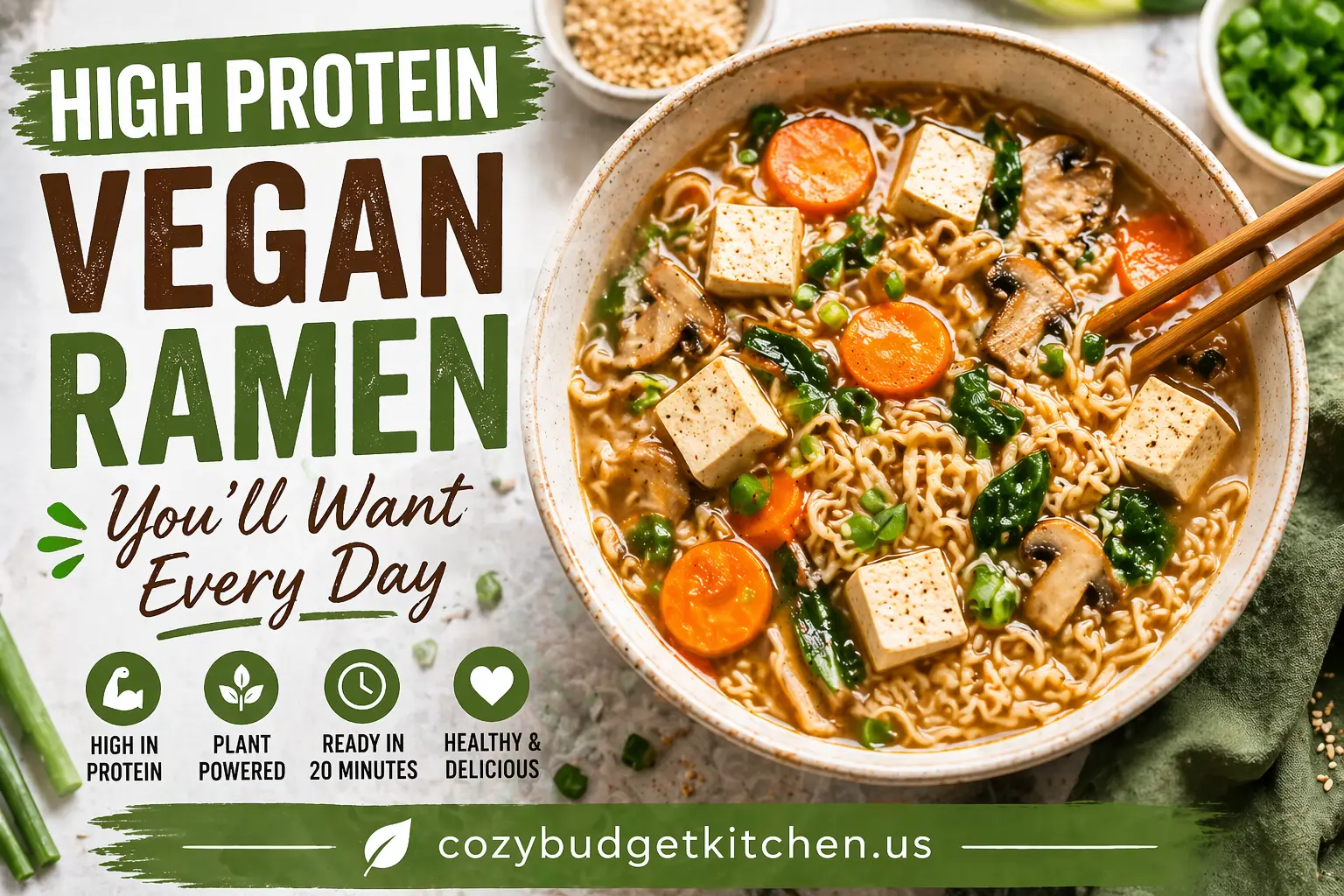
A Simple Guide to Preparing Vegan High Protein Ramen
Welcome to my kitchen! If you are craving a healthy, comforting meal, this vegan high-protein ramen is exactly what you need. Delivering 500 calories and an impressive 37g of protein per serving, it is absolutely loaded with essential vitamins and minerals. It is incredibly satisfying, deeply nourishing, and beautifully simple to customize with whatever plant-based proteins you love most. It truly is the ultimate healthy vegan meal!
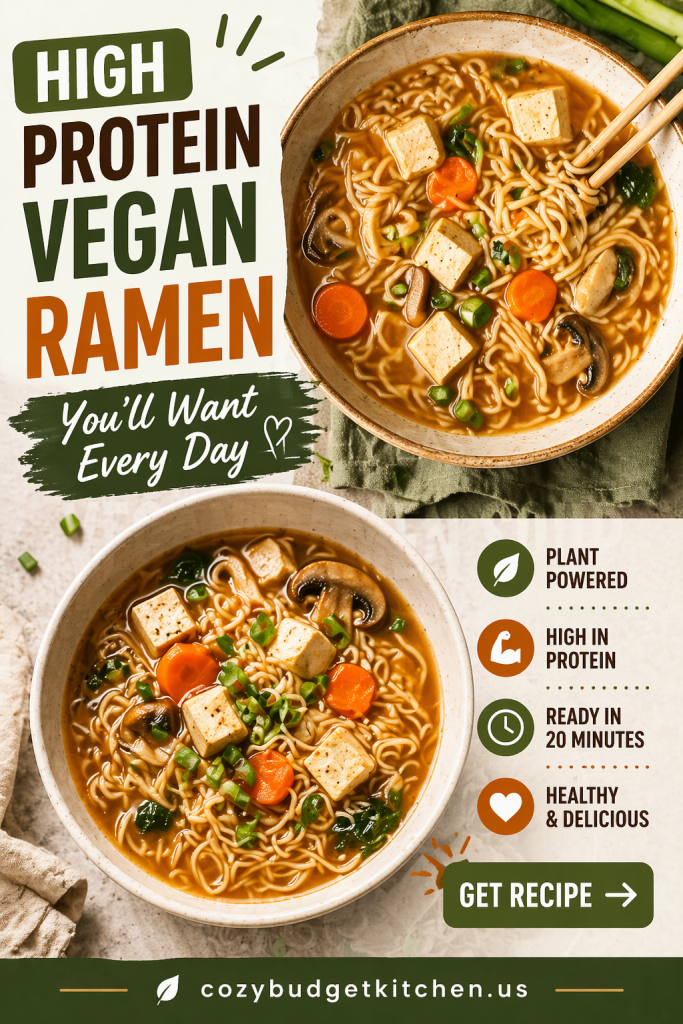
Is This High Protein Ramen Recipe Healthy?
Absolutely! This wholesome vegan ramen is packed with natural, whole-food ingredients designed to boost your energy, aid in recovery, and promote overall wellness.
Here is exactly what makes this bowl so incredibly nutrient-dense:
- High in Plant-Based Protein
- Tofu provides a complete protein profile, which is fantastic for muscle recovery.
- The ramen noodles themselves contribute extra grams to help you hit your daily protein targets.
- Optional mix-ins like textured vegetable protein (TVP) or edamame can push the protein content even higher!
- Packed With Vitamins & Minerals
- Mushrooms: Bring B vitamins, antioxidants, and selenium to the table.
- Carrots & scallions: Offer a great dose of fiber, Vitamin K, and Vitamin A.
- Vegetable broth: Replenishes essential electrolytes.
- Good-for-You Fats
- A touch of olive oil adds heart-healthy monounsaturated fats to the broth.
- Gut-Friendly Fiber
- The combination of fresh veggies, tofu, and whole-food additions keeps your digestion running smoothly and helps you stay full longer.
If your goal is to find a healthy vegan ramen recipe that is rich in protein, a breeze to whip up, and incredibly satisfying—you have found the perfect match.
Understanding the Nutrition Info
Knowing exactly what goes into our bodies is so important. This vegan high-protein ramen doesn’t just taste amazing; it is a true nutritional powerhouse. Let’s break down the dietary facts for this delicious dish.
This recipe yields 4 satisfying servings. Each serving provides:
- 500 calories
- 57g of carbohydrates
- 6g of dietary fiber
- 16.5g of fat
- 37g of protein
- 600 mg of calcium
- 6 mg of iron
Exploring Vegan Protein Options
When you start exploring the wonderful world of vegan cooking, discovering the wide variety of plant-based proteins is key.
The health perks of adding these vegan protein sources to your daily meals are truly remarkable. When compared to traditional meat-based proteins, options like tofu aren’t just high in protein—they are completely cholesterol-free and much lower in saturated fats. This makes them a fantastic, heart-healthy choice that can help lower the risk of chronic conditions like hypertension and cardiovascular disease.
Here are some fantastic vegan protein options you can use for your ramen recipe:
- Tofu: I love using two blocks of firm tofu (about 32 oz. total) for the entire pot. This adds a massive 70g of protein and 700 calories to the overall meal.
- Edamame: Soybeans are a brilliant substitute for tofu. Tossing in 3 cups of shelled edamame beans will add 60g of vegan protein and 600 calories.
- TVP: Textured vegetable protein is another great choice. Just one cup of dry TVP introduces 52g of protein and 360 calories to the dish, and you can easily scale that up if desired.
- Great northern beans: Using 3 cups (or 2 drained cans) of great northern beans will give you 740 calories and 52g of protein.
- Ramen Noodles: Don’t forget the base! 8 oz. of standard ramen noodles naturally adds about 28g of protein to the entire recipe.
Embracing these plant-powered proteins in your ramen—and your everyday diet—is a wonderful step toward a more sustainable, healthier lifestyle, one tasty bowl at a time.
How to Make the Vegan High Protein Ramen Recipe
Let’s bring this comforting dream to life right in your own kitchen! You will only need a few basic pantry staples and a little bit of culinary imagination to create this healthy ramen.
Your key ingredients will include olive oil, fresh garlic, ginger, sliced mushrooms, vegetable stock, scallions, carrots, soy sauce, tofu, and naturally, ramen noodles. Let’s get cooking!
- Begin by warming the olive oil in a large pot over medium heat. Add in your finely chopped garlic and ginger, allowing them to sizzle until they become wonderfully fragrant. This garlic-ginger base doesn’t just smell heavenly; it builds a deeply flavorful foundation for the soup.
- Next, pour in the vegetable stock and soy sauce, bringing the liquid to a gentle boil.
- Chop up your scallions and carrots, and toss them into the pot along with the sliced mushrooms.
- Now it’s time for our protein superstar—tofu! Cut your firm tofu into bite-sized cubes and carefully drop them into the pot, giving them time to soak up that beautifully aromatic broth. As a highly versatile vegan protein, tofu adds both nutrition and a lovely, tender texture to the soup.
- Finally, prepare your ramen noodles in a separate pot according to the package directions. Once cooked, combine them with your rich broth, letting all the delicious components meld together perfectly.
Feel completely free to adjust this recipe to suit your own dietary needs or taste preferences! Whether you want to splash in a little extra soy sauce, sprinkle some red chili flakes for a spicy kick, or swap the tofu for another vegan protein, this ramen is essentially a blank canvas for your kitchen creativity.
This meal isn’t just a lifesaver on chilly evenings when you crave comfort food; it is a highly nutritious staple to add to your vegan recipe rotation, complete with all the dietary info to keep your meals balanced. Dive right in and enjoy every hearty slurp!
n👩🍳 Sarah’s Kitchen: Vegan High Protein Ramen
Nutrition Facts
Reader Reviews
How to Store the Meal
Wondering what to do with those leftovers? Don’t worry! Saving your homemade ramen for another day is incredibly easy, and I’m here to walk you through it.
First, let’s chat about containers. You will definitely want something airtight to lock in all those fresh flavors. Glass containers are my absolute favorite because they are super easy to clean and never absorb lingering smells.
Typically, your leftover ramen will stay fresh and delicious in the fridge for about 3 to 4 days. After that window, the vibrant flavors might begin to fade, and it won’t be quite as fresh.
If you want to keep it longer, you can freeze portion-sized servings in airtight containers for up to 1 month!
When you are ready to reheat, simply transfer the ramen to a pot on the stove and warm it gently over low heat, giving it an occasional stir. This stovetop method distributes the heat evenly, bringing the broth and veggies back to life without ruining their texture.
If you are short on time, the microwave is perfectly fine too! Just make sure to cover your bowl and stir it halfway through to guarantee it heats evenly.
Ultimately, with these easy storage tricks, your leftover high-protein ramen becomes a lightning-fast, healthy meal for those busy days when cooking is the last thing on your mind. Keep these tips handy, and you will always have a nourishing bowl of ramen ready to satisfy your cravings.
Follow me on Pinterest for more easy vegan protein recipes!
FAQ — High Protein Vegan Ramen
1. How do you add more protein to vegan ramen?
You can effortlessly boost your plant-based protein by stirring in edamame, tofu, beans, or TVP. Upgrading to high-protein noodles or simply doubling the amount of tofu are also fantastic ways to increase your protein grams per serving.
2. Can you make high protein ramen without tofu?
Absolutely! You can easily swap out the tofu for seitan, TVP, soy curls, white beans, or edamame. All of these are brilliant high-protein vegan alternatives that taste amazing in ramen broth.
3. Is vegan ramen healthier than regular ramen?
Generally, yes! Most vegan ramen is completely cholesterol-free and lower in saturated fats. When you load it up with veggies, tofu, and a clean vegetable broth, it usually boasts much higher levels of fiber, minerals, and vitamins than standard ramen.
4. What type of noodles should I use for high protein ramen?
While regular ramen noodles do have some protein, you can level up by choosing edamame spaghetti, brown rice ramen, whole-grain noodles, or specialized high-protein ramen noodles for an extra fiber and protein boost.
5. Can I meal prep this vegan ramen?
You certainly can. This soup holds up beautifully for 3 to 4 days in the refrigerator, or up to a month in the freezer. For the absolute best texture, I recommend storing the cooked noodles and the broth in separate containers until you’re ready to eat.
6. How do I make ramen broth more flavorful?
To build a stunning umami base, let your ginger, garlic, scallions, mushrooms, and soy sauce simmer together gently. If you want even more depth, try stirring in a little rice vinegar, sesame oil, chili crisp, or miso paste!
7. Is this high protein ramen gluten-free?
It is very easy to adapt! Just use your favorite gluten-free ramen noodles and swap out the regular soy sauce for coconut aminos or tamari.
8. Can I lower the calories in this ramen?
Yes, definitely. You can use a smaller portion of noodles, cut back on the olive oil, or replace the tofu with a lower-calorie protein like TVP. Loading the soup with extra greens and mushrooms is a great way to make the bowl huge and filling without adding many calories.
9. Can you freeze tofu ramen?
You can, though keep in mind that freezing tofu changes its texture, making it slightly softer and more spongy. If you prefer your tofu to remain firm, try air-frying or pan-frying the cubes before you add them to your soup!
10. What vegetables can I add to vegan ramen?
The sky is the limit! Fantastic additions include bell peppers, cabbage, zucchini, kale, spinach, bok choy, bean sprouts, mushrooms, and carrots. They make the bowl much more filling and skyrocket the nutrient content.
Sarah’s Budget Tips
- Buy Tofu in Bulk: Tofu is incredibly cheap when bought in multi-packs at Asian markets or warehouse clubs. It lasts a long time in the fridge!
- Use Bouillon Paste: Instead of buying expensive cartons of liquid vegetable broth, grab a jar of vegetable bouillon paste. It is much more cost-effective and lasts for months.
- Save Your Veggie Scraps: Keep your carrot peels, mushroom stems, and scallion ends in a freezer bag. Boil them later to make your own free, nutrient-dense vegetable stock!