Best Homemade Chicken Soup
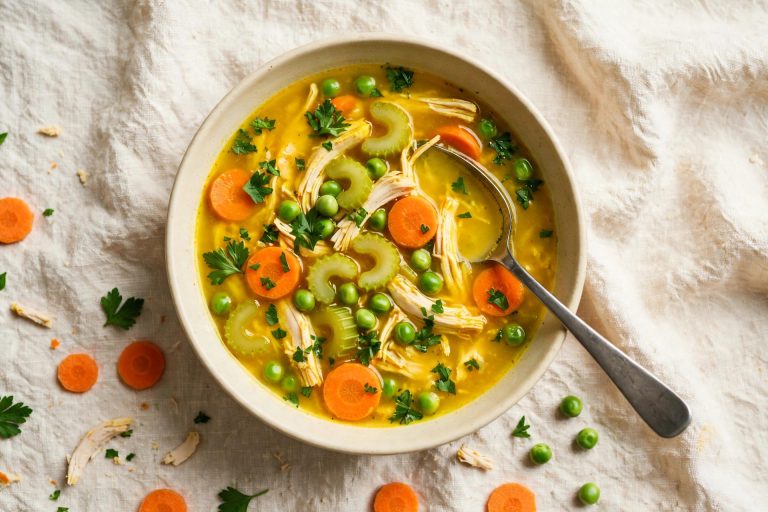
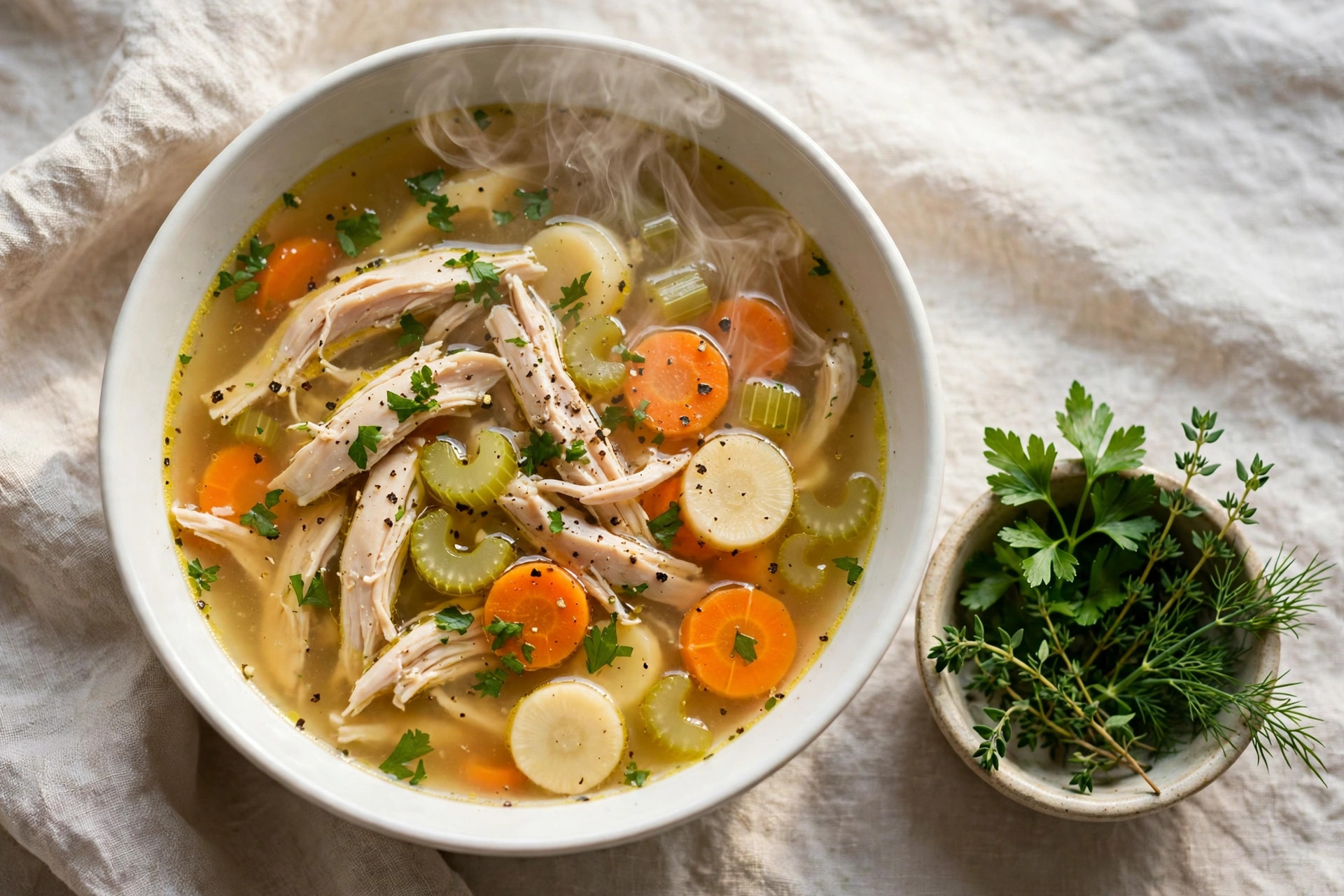
The best homemade chicken soup does not need much — just tender poached chicken, hearty winter vegetables and fresh herbs simmered in good chicken broth. No noodles, no fuss, no twenty-ingredient list. It is the soup you make when the cold weather arrives, when someone in the house is feeling under the weather, or when you simply want a bowl of something that tastes like being looked after.
What makes this version special is a small twist: parsnips take the place of the usual noodles. They are just as filling, but they add a gentle sweetness that works beautifully with the fresh tarragon and thyme. The whole thing comes together in about thirty minutes, in one pot, and it is naturally gluten-free and paleo-friendly too.
Prep: 10 min | Cook: 20 min | Total: 30 min | Serves: 4 | Diet: Gluten-Free, Paleo

Why You’ll Love This Homemade Chicken Soup
- Ready in 30 minutes: a proper from-scratch chicken soup, start to finish, in half an hour — weeknight-friendly in every way.
- No noodles needed: sweet parsnips make the soup hearty and filling, with more flavour and more nutrients than plain pasta ever could.
- Light but satisfying: a clear golden broth loaded with vegetables and lean chicken — nourishing without feeling heavy.
- Fresh herbs do the magic: thyme and tarragon are the quiet stars here; tarragon in particular gives chicken soup a lift you will not get from dried seasoning alone.
- Freezer-friendly comfort: it keeps for days in the fridge and months in the freezer, so a double batch is always a good idea.
What Makes a Perfect Chicken Soup?
The secret to a phenomenal chicken soup is restraint: a short ingredient list, a good broth, and chicken cooked gently instead of boiled hard. Poaching is the key move. The breasts go into the broth, the pot comes to a boil, and then the heat drops to low and the lid goes on. Fifteen minutes of gentle simmering leaves the chicken tender and juicy all the way through — boiled chicken turns stringy and dry, poached chicken shreds into soft, silky strands.
The second rule is about the broth itself. With so few ingredients, there is nowhere for a weak broth to hide, so use the best low-sodium chicken broth you can find — or homemade, if you have it. Taste at the end, not the beginning: the vegetables and herbs give up their flavour as they simmer, and the final seasoning is what ties it all together. A handful of fresh parsley and a crack of black pepper over each bowl is the finishing touch that makes it taste finished.
Ingredients
- 2 tablespoons extra virgin olive oil
- 4 medium carrots, peeled and sliced
- 3 parsnips, peeled and sliced
- 3 celery ribs, sliced
- ½ medium onion, diced
- 1 leek, halved lengthwise, sliced, and rinsed
- 4 garlic cloves, minced
- 1 teaspoon kosher salt
- ½ teaspoon freshly ground black pepper
- 2 boneless skinless chicken breasts
- 2 sprigs fresh thyme
- 2 sprigs fresh tarragon
- 1 bay leaf
- 5 cups low-sodium chicken broth
- ¼ cup roughly chopped fresh parsley
How to Make Homemade Chicken Soup
- Sauté the Vegetables: Heat the olive oil in a large pot over medium heat. Add the carrots, parsnips, celery, leek and onion and cook for 4–5 minutes, stirring frequently, until they start to soften. Add the garlic, salt and pepper and stir for another minute.
- Poach the Chicken: Add the thyme, tarragon, bay leaf, chicken breasts and broth to the pot. Bring everything to a boil, then reduce the heat to low and cover. Simmer for 15 minutes, or until the chicken is fully cooked — an instant-read thermometer should read 165°F at the thickest part.
- Shred the Chicken: Lift the chicken out with tongs onto a cutting board and shred it gently with two forks. Return the shredded chicken to the pot and simmer for another 1–2 minutes so it soaks up the broth.
- Serve: Fish out the thyme sprigs, tarragon sprigs and bay leaf. Stir in the chopped parsley and ladle into bowls, garnishing with extra fresh parsley and black pepper.
Why Poaching Makes Better Chicken Soup
Poaching sounds fancy, but it is really just simmering gently instead of boiling — and it is the difference between juicy chicken and dry chicken. A rolling boil tightens the muscle fibres and squeezes the moisture out; a low, lazy simmer lets the heat travel through slowly and evenly, so the breasts stay tender. The same gentle heat keeps the broth clear and golden instead of cloudy. To check for doneness without cutting the chicken open, use an instant-read thermometer: 165°F at the thickest part means it is done. And if shredding by hand feels slow, a stand mixer with the paddle attachment shreds two warm breasts in about ten seconds — a handy trick if you make this soup often.
Tips
- Use a good broth: with such a simple ingredient list, the broth carries a lot of the flavour — choose a low-sodium one you actually enjoy tasting on its own.
- Dried herbs work too: fresh is best here, but if you only have dried thyme and tarragon, use about ½ teaspoon of each — dried herbs are stronger, so start small and add more if needed.
- Don’t overcook the chicken: set a timer for the 15-minute poach and check with a thermometer; even a few extra minutes can dry out a breast.
- Swap the parsnips if you like: turnips or potatoes work in their place — potatoes may need a few extra minutes to cook until fork-tender.
- Add more vegetables: peas or zucchini stirred in near the end are lovely, and a handful of spinach wilts in beautifully in the last minute.
Variations
- Add noodles or rice: if your household insists on noodles, cook them separately and add to each bowl — they stay firmer that way and do not soak up the broth in storage.
- Make it golden: stir in a teaspoon of turmeric and a little grated fresh ginger with the garlic, and add zucchini noodles at the end for a warming, golden version.
- Make it heartier: add a diced potato or two with the carrots, and give the soup a few extra minutes of simmering until everything is fork-tender.
- Chicken thighs instead of breasts: thighs stay even juicier through the poach and add a richer flavour — use the same weight and the same cooking time.
Cost Breakdown
Two chicken breasts, a bag of carrots and parsnips, and a carton of broth — that is nearly the whole shopping list, and it comes to roughly $2 per serving for four generous bowls. Parsnips and leeks cost a little more than plain carrots, but they are what make this soup taste like more than the sum of its parts. A pot of this on the stove beats a $12 takeaway soup on price, on flavour, and on the way your kitchen smells while it cooks.
More Cozy Soups to Try
If you love a chicken soup that looks after itself while you get on with your day, our slow cooker chicken tortellini soup is the set-and-forget cousin of this one. For a whole shelf of cold-weather bowls in one place, the 25 easy fall soups collection has a soup for every kind of grey day. And for a light dinner to serve alongside, our classic Caesar salad makes a crisp, fresh partner to this warm, brothy bowl.
Storage
Let the soup cool to room temperature before storing it in an airtight container in the fridge, where it stays good for 4–5 days — perfect for quick reheats all week. To freeze, portion it into containers or a silicone freezing tray and keep it for up to 3 months. Reheat a single serving in the microwave for a few minutes, or warm a larger pot gently on the stove. If you froze it with noodles, expect them to soften; that is why cooking noodles separately is worth the extra pan.
Frequently Asked Questions
Does chicken soup actually help when you have a cold?
It certainly feels like it does. The warm broth is soothing, and the mix of lean protein, vegetables and herbs is genuinely nourishing. It is the soup most of us reach for when we are under the weather — and that comfort counts for a lot on its own.
Can I use dried herbs instead of fresh?
Yes. Fresh thyme and tarragon are best, but dried works — use about ½ teaspoon of each, since dried herbs are stronger, and add more to taste if you like.
Can I use chicken thighs instead of breasts?
Absolutely. Boneless, skinless thighs poach beautifully and stay even juicier than breasts. Use the same amount and the same 15-minute simmer, checking for 165°F inside.
Can I add noodles to this soup?
You can — just cook them separately and add them to each bowl when serving. Cooked in the pot, noodles soak up the broth and go soft in storage, especially if you are freezing leftovers.
How do I know the chicken is fully cooked?
After 15 minutes of gentle simmering, check the thickest part with an instant-read thermometer — it should read 165°F. If it is not there yet, give it another 2–3 minutes and check again.
That’s the best homemade chicken soup — simple, golden, and ready in half an hour, with parsnips doing the quiet work that noodles usually get credit for. Make a pot this week and keep the leftovers for the next grey day. And if you’re saving healthy soups for the cold months, follow Cozy Budget Kitchen on Pinterest — new recipes land there every day.